Understanding stone
Compare the families
Geology, architecture and landscape. Discover stones from around the world, understand their character and learn to choose them for your spaces.
 01
Geological family
Sedimentary
Sedimentary rocks form through accumulation, compaction and cementation of sediments, or precipitation of minerals. Sandstones, limestones and travertines belong to this broad family but have different compositions and structures. Visible bedding can influence slab design and cutting direction. Selection calls for attention to pores, cement, discontinuities and the specific product rather than assuming that every member behaves like one familiar stone.
View all entries → 02
Geological family
Metamorphic
Metamorphic rocks result from existing rocks changing under new pressure, temperature and fluid conditions. Marbles and quartzites can show recrystallised textures; gneisses, slates and phyllites often show oriented minerals and recognisable planes. These structures matter for cutting direction, thickness and interpretation of mechanical tests. Metamorphic origin alone does not establish suitability: composition, weathering and processing remain decisive.
View all entries →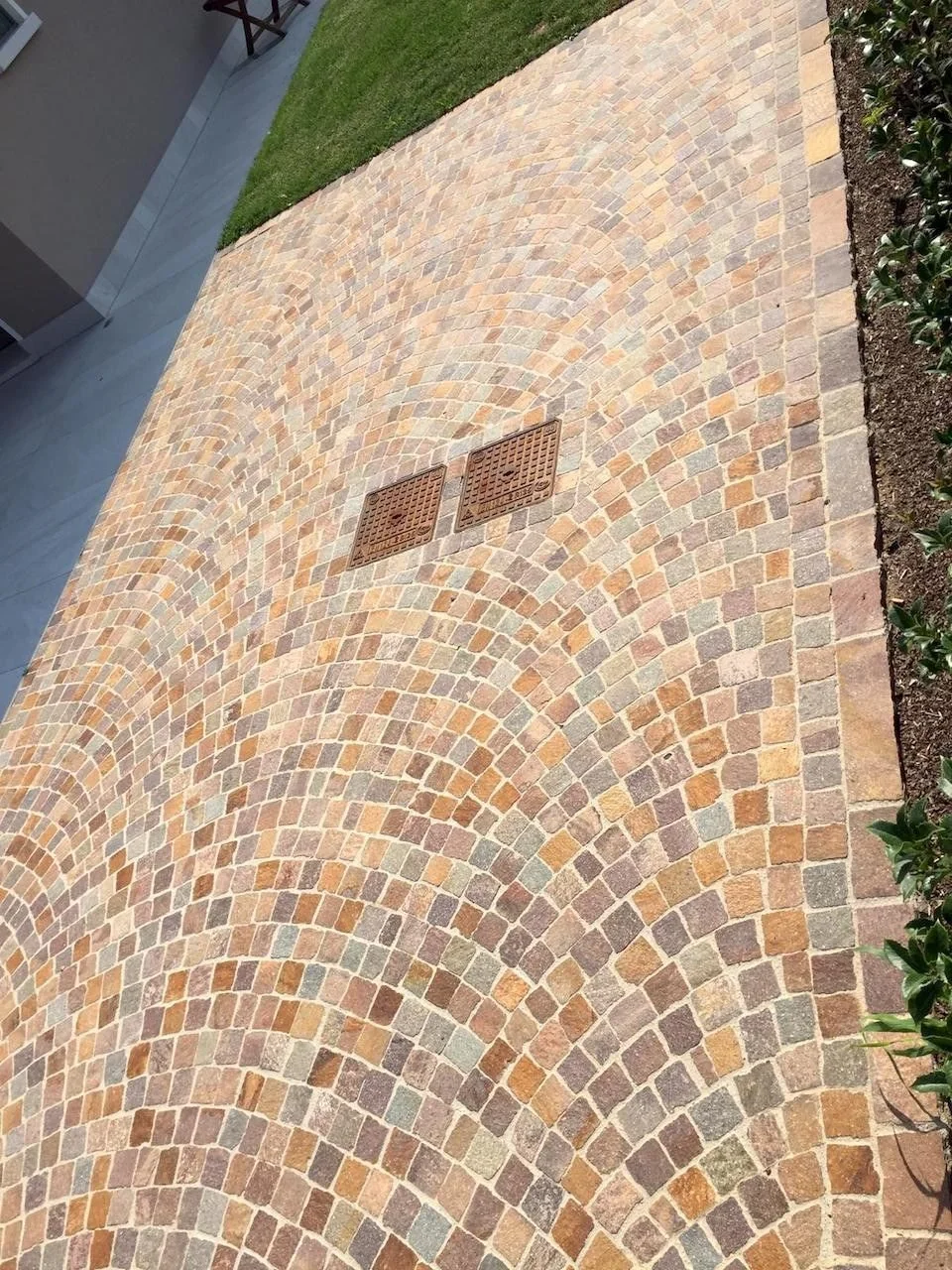 03
Geological family
Igneous
Igneous rocks form when molten material solidifies. Cooling underground can produce visible crystals, as in granite; cooling at the surface can produce fine grains, cavities or porphyritic textures. Basalt, granite and many porphyries illustrate different compositions and structures. The commercial term granite can also include other geological rock types: a specification benefits from both the trade name and petrographic description.
View all entries → 04
Geological family
Decorative forms and materials
Pebbles, aggregates and river stones describe shapes or processing rather than one geological composition. Agate and petrified wood are ornamental materials with their own characteristics and should not automatically be treated like paving slabs. This section distinguishes a material from its commercial form to connect decoration, landscape and informed use.
View all entries →